
Key Features
- Agent: Micron-sized particles coupled with inert gases.
- Mechanism: Heat absorption paired with oxygen dilution.
- Applications: Particularly suitable for enclosed areas like data centers,
server rooms, and electrical cabinets.




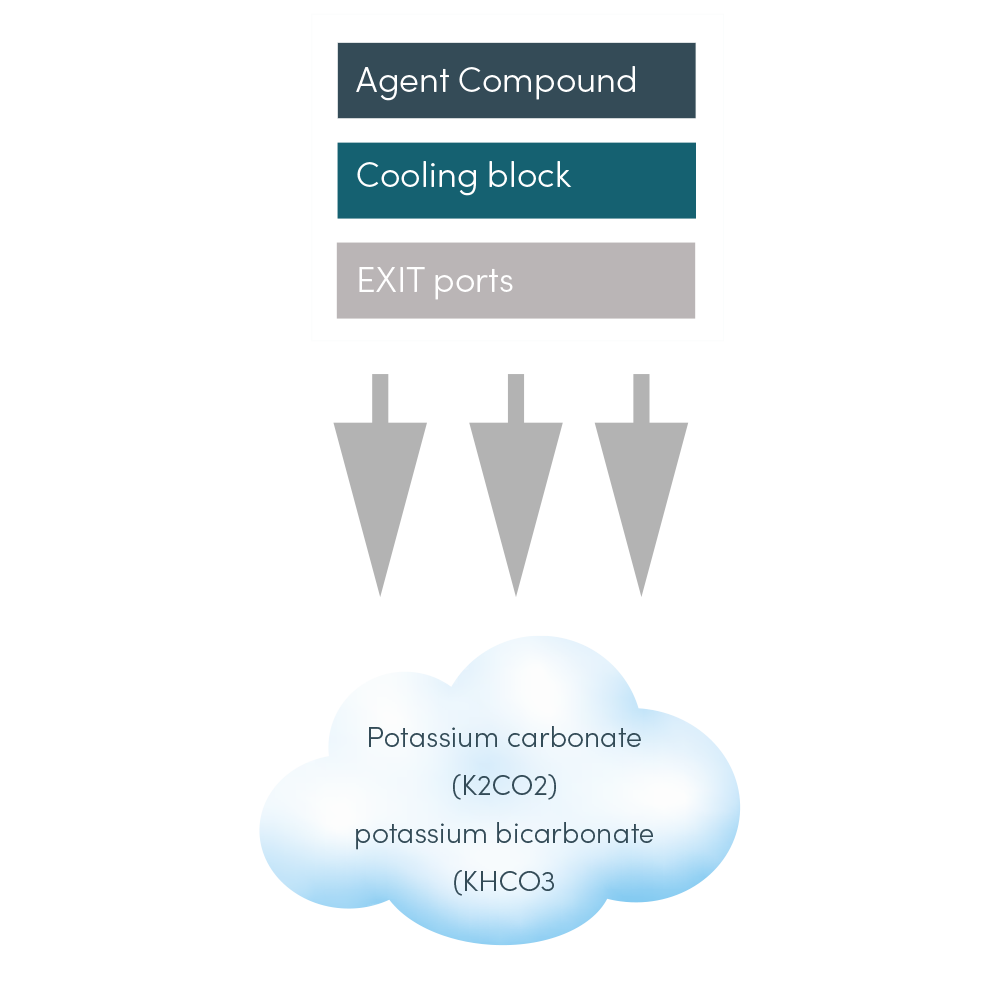
Aerosol fire extinguishing systems release a fine mist of microscopic particles and gases, rapidly expanding to dilute oxygen levels around a fire and absorb heat. This action snuffs out the flames effectively, avoiding the use of water or chemicals that might harm sensitive apparatus or infrastructure. However, it’s important to note that aerosols are chemical substances—often liquids or powders—that can leave a fine residue of potassium carbonate (K2CO2) and potassium bicarbonate (KHCO3) on surfaces upon deployment. This residue may react with metals or delicate surfaces, necessitating a thorough cleanup of all sensitive surfaces post-activation, as strongly advised by suppliers.
Inergen extinguishing systems when activated deploy a mix of naturally occurring gases into the protected area—consisting of nitrogen, argon and carbon dioxide—to reduce oxygen levels to a non-combustible threshold, all the while maintaining an environment safe for human exposure.


| AEROSOL | INERGEN | |
|---|---|---|
| Operating Principle | Aerosol systems employ a cloud of fine particles to quickly absorb heat and diminish oxygen levels. | In contrast, Inergen systems gently lower oxygen concentration to impede combustion while preserving a breathable atmosphere. |
| Effectiveness and Speed | Aerosols boast rapid fire suppression due to the swift expansion and cooling effect of the mist but require success on the first attempt to extinguish the fire. | Inergen systems, while being slightly slower to reach extinguishing effect, but maintaining suppression effectively over time. |
| Occupant Safety | Aerosol systems demand adherence to design limits to be considered safe for occupied spaces, though the aftermath may impede breathing, necessitating immediate evacuation. The particles released are hot when activated, so safety distance is required. | Inergen is explicitly engineered for human-safe environments, keeping oxygen levels sufficient for safety during fire suppression. |
| Environmental Impact | Aerosols are optimal for enclosed spaces requiring swift fire suppression without the use of water. However, they are not advised for rooms with sensitive equipment such as delicate computers, hospital equipment, MRI- CT-, PET-, X-ray and Ultrasound scanners, etc. | Inergen’s versatility and safety profile make it suitable for a broader range of uses, especially where occupant safety is paramount. |

The choice between Aerosol and Inergen fire extinguishing systems hinges on various factors, including the specific requirements of the area to be protected, occupant safety, content delicacy, environmental considerations, and cost. Another important factor is how fast the system and normal production can be re-established. Both systems offer distinct advantages and can be exceptionally effective when aptly applied to their designed purposes. Engaging fire protection experts is vital in selecting the most fitting system for your needs, ensuring maximum protection and safety.
Through this comparative overview, we aim to illuminate the key distinctions and considerations in choosing between Aerosol and Inergen systems, highlighting each’s strengths and ideal applications within the realm of fire protection solutions.
Whether you need advice or a thorough review of your fire protection needs, our team is here to guide you every step of the way. We are committed to answering all your questions and providing the support you require.
Simply fill out the contact form, and we will promptly contact you. Your fire safety is our priority.
Fejl: Kontaktformular ikke fundet.


 Frederiksborg Slot